Balayage: Why This Natural Hair Colour Trend Remains Timeless
Hair colour trends come and go, but some techniques manage to remain popular for years. Balayage is undoubtedly one of them. One of the main reasons is the natural appearance it can create. Instead of obvious highlights or harsh colour contrasts, balayage focuses on soft transitions, different levels of brightness and a look that can be adapted to the individual hair type, skin tone and personal style.
For anyone who wants a noticeable change without making their hair look overly coloured, balayage can be an attractive option. The technique can be used on blonde, brunette and darker hair and can range from extremely subtle highlights to significantly brighter results.
What Makes Balayage Different?
The word balayage comes from French and is associated with the idea of “sweeping” or “painting.” This describes the basic concept behind the technique quite well. Rather than applying colour uniformly from the roots to the ends, selected sections of the hair are lightened or coloured strategically.
This allows different dimensions to be created throughout the hair. Some areas intentionally remain darker while others receive more brightness. Lighter sections around the face can also help create a fresher and more vibrant overall appearance.
Unlike highly uniform highlighting techniques, balayage is therefore less about making every section look identical. Instead, the focus is on creating a balanced combination of light, depth and movement.
A Hair Colour That Should Be Personal
A successful balayage does not begin when the colour is applied. It begins with a proper consultation.
The natural hair structure, existing colour, previous colouring treatments and the desired result all need to be considered. Inspiration photographs from social media can certainly be useful, but the exact same colour will not necessarily look identical on every person.
A shade that works beautifully with one skin tone and natural hair colour may create a completely different effect on someone else. For this reason, professional balayage should ideally be planned individually.
Those searching for balayage in the Frankfurt area, for example, can find information about personalised balayage looks and consultation options at balayage.live.
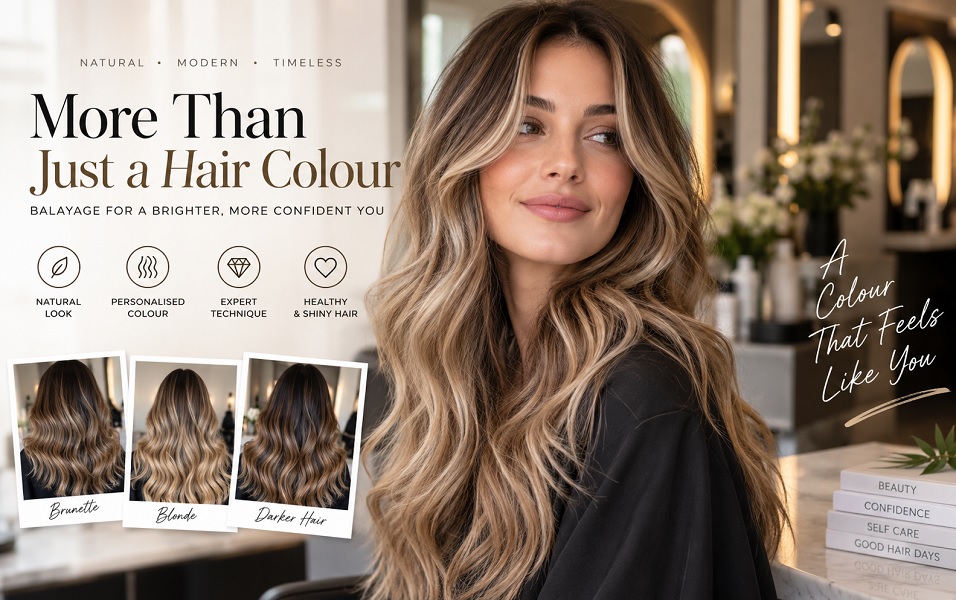
Balayage Does Not Always Mean Blonde
Balayage is often associated with photographs of long, wavy blonde hair. However, the technique is much more versatile than this image suggests.
On brunette hair, warm caramel, honey or beige tones can add depth and brightness without completely changing the natural base colour. Darker hair can also benefit from carefully placed lighter reflections that create movement while preserving much of its original character.
Cooler shades can be used as well when they complement the client’s skin tone and existing hair colour.
The goal therefore does not always have to be achieving the lightest possible result. Sometimes only a few strategically positioned highlights are needed to create a visible transformation.
Why Soft Colour Transitions
Matter One of the defining characteristics of modern balayage is a harmonious transition between darker and lighter areas.
Ideally, there should not be a harsh line where the natural hair colour suddenly ends and the lighter section begins. Instead, the brightness gradually develops through the lengths of the hair.
This can also make the growing-out process appear softer compared with very uniform traditional highlights, as the difference between the roots and coloured sections may be less obvious.
However, the result that can realistically be achieved depends heavily on the starting point. Previously coloured hair, very dark artificial pigments or damaged hair may affect how much lightening can safely and reasonably be achieved during one appointment.
How to Care for Balayage
Hair Even the most beautiful hair colour requires proper maintenance. Lightened hair can become more sensitive to heat styling, frequent washing and environmental influences.
Using a quality shampoo designed for coloured hair, along with a suitable conditioner or hair mask, can help keep the hair looking healthy. Heat protection is also important for anyone who regularly uses a blow dryer, straightener or curling iron.
The ideal products will depend on the individual hair type. Fine hair, for example, may need lighter products than very thick, dry or textured hair.
A toner or gloss can also be useful between larger colour appointments. It can help refresh the desired shade, improve shine and neutralise unwanted warm or cool tones depending on the chosen result.
A Timeless Look Rather Than a Short-Term Trend
Perhaps the greatest advantage of balayage is its flexibility. The technique does not require one particular shade or one specific level of brightness.
A balayage can be subtle, elegant and extremely natural, or it can be designed with stronger contrasts for a more dramatic transformation.
That versatility is one of the reasons the technique works for different ages, hair colours and personal styles. Instead of simply copying the latest trend, balayage makes it possible to create a colour concept that complements the natural hair and the person wearing it.
Anyone considering balayage should therefore think beyond the colours currently dominating social media. A much more useful question is: Which level of brightness, which shades and which colour placement will work best with my own hair?
Ultimately, a beautiful balayage is not defined by having the lightest possible ends. It comes from finding the right balance between colour, dimension, hair quality and individual style.